$19.99
ACTH(4-7)-PGP analog investigated in CNS injury models
ALL ARTICLES AND PRODUCT INFORMATION PROVIDED ON THIS WEBSITE ARE FOR INFORMATIONAL AND EDUCATIONAL PURPOSES ONLY. The products offered on this website are intended solely for research and laboratory use. These products are not intended for human or animal consumption. They are not medicines or drugs and have not been evaluated or approved by the FDA to diagnose, treat, cure, or prevent any disease or medical condition. Any form of bodily introduction is strictly prohibited by law.
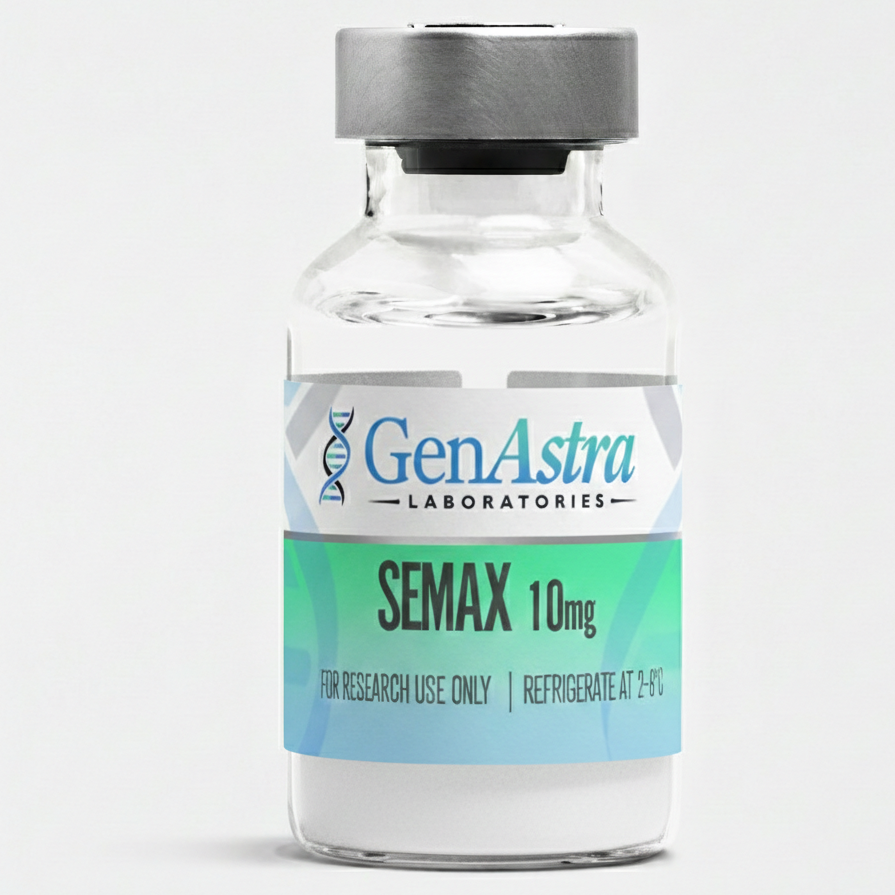
Semax is a synthetic peptide analog explored primarily in neuroprotection and gene-expression modulation studies, with much literature concentrated in preclinical or regional contexts.
Semax is a synthetic ACTH(4-7)-PGP analog studied mainly in CNS preclinical work, including stroke-model and neuroinflammatory signaling research.
Add this item to your cart, submit your shipping details at checkout, and wait for your order confirmation. Interac e-Transfer instructions are sent after the order request is received.
| Catalog category | Neuroprotective & Cognitive Peptides |
|---|---|
| Source category | Neuroactive Peptides |
| Composition | Semax 10 mg |
| Research status | preclinical |
| Regulatory | Included as a neuroactive investigational profile only. |
| Research note | This profile is informational and does not imply medical indication or approved therapeutic use. |
| Keywords | 5mg, brain, cognitive, focus, memory, neuro, neuroprotective, nootropic, peptide, peptides, semax |
Consider these supplementary peptides for a comprehensive research approach.
Our team is ready to assist you with any inquiries regarding our catalogue of peptides and their applications.
Discount Applied Successfully!
Your savings have been added to the cart.